
Fuzhou
Welcome to — the capital city of Fujian Province in southeastern China. Surrounded by mountains and facing the East China Sea, Fuzhou is known for its mild, humid climate and beautiful natural scenery. The city enjoys warm springs, hot summers, and gentle winters, with plenty of green trees all year round. As one of China's historical and cultural cities, Fuzhou blends tradition and modern life — from ancient temples and traditional tea culture to a fast-growing downtown filled with innovation and creativity.
Live in Fuzhou
The Story of Fuzhou
Nestled along the winding Min River, Fuzhou's story stretches back more than
2,000
years,
beginning as a quiet riverside settlement that grew into one of China's most
dynamic
coastal
cities. The city's name, Fuzhou, means “A blessed place” — a wish that turned
into
reality
as it blossomed into a thriving hub of trade, culture, and innovation.
During the Tang and Song Dynasties, Fuzhou became a major center for scholars,
tea
merchants,
and seafarers. Ships departed its harbor bound for Japan and Southeast Asia,
carrying
porcelain,
silk, and the spirit of the ancient Min culture. The great philosopher Zhu Xi
once
taught in
the
region, leaving behind a legacy of learning that still shapes the city's
character
today.
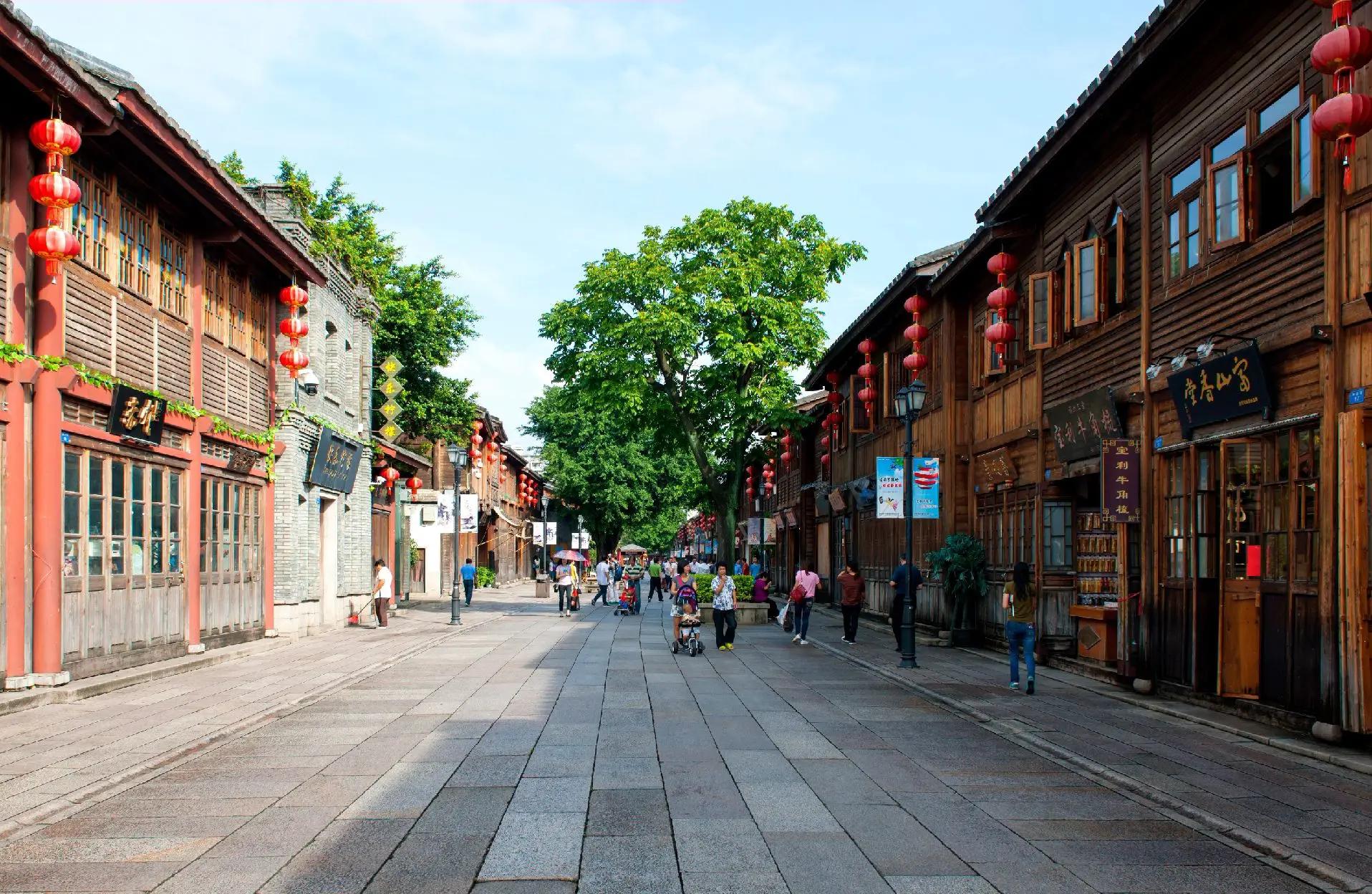
In the nineteenth century, Fuzhou opened to the world as one of China's treaty ports. The Mawei Shipyard, founded in 1866, became a landmark of China's early modernization, marking the rise of its naval industry. Around the same time, thousands of Fujianese people set sail from Fuzhou's shores to Southeast Asia, creating cultural connections that continue to this day. Modern Fuzhou is a fascinating blend of heritage and progress — ancient banyan trees shade busy streets filled with cafés and tech startups, while the historic Three Lanes and Seven Alleys (Sanfang Qixiang) preserve the city's elegant past. Beneath its calm rivers and leafy avenues lies a city that has continually reinvented itself — open to the world, proud of its roots, and full of life.
Nestled along the winding Min River, Fuzhou's story stretches back more than
2,000
years,
beginning as a quiet riverside settlement that grew into one of China's most
dynamic
coastal
cities. The city's name, Fuzhou, means “A blessed place” — a wish that turned
into
reality
as it blossomed into a thriving hub of trade, culture, and innovation.
During the Tang and Song Dynasties, Fuzhou became a major center for scholars,
tea
merchants,
and seafarers. Ships departed its harbor bound for Japan and Southeast Asia,
carrying
porcelain,
silk, and the spirit of the ancient Min culture. The great philosopher Zhu Xi
once
taught in
the
region, leaving behind a legacy of learning that still shapes the city's
character
today.
Tips
| Number | Topic | Summary | Details |
|---|---|---|---|
1 |
Weather | Fuzhou has a subtropical climate. |
Summers (May-Oct) can feel sticky, so light clothing is a must.
Winters are mild but humid; layering is better than a heavy coat.
Spring and early summer bring frequent rain — a compact umbrella helps a
lot.
|
2 |
Food & Drink | Fuzhou is known for light, slightly sweet flavors, different from spicy cuisines elsewhere. |
Fuzhou fish balls — bouncy, sometimes stuffed with meat.
Lychee pork — sweet & sour pork with a lychee twist. Buddha jumps over the wall — a luxurious soup of seafood and herbs.
Noodles, dumplings, and rice cakes are cheap and everywhere.
Try local Oolong and Jasmine teas!
|
3 |
City Life & Culture | Fuzhou blends laid-back living with modern tech areas and historic neighborhoods. |
Nearby markets offer cheaper souvenirs.
If you know a few Fuzhou dialect words, you can bargain with vendors for fun.
|